The Normalization Trap: Mastering for Three Platforms Without Chasing Your Tail
The loudness war ended with a shrug, not a treaty. At some point the streaming services quietly decided they would rather turn your master down than let it win, and most of us adjusted without ever reading a spec sheet. Here is the awkward part: in 2026 the fight did not disappear, it just moved. It is no longer about who can squash a mix flattest. It is about who understands what happens to a perfectly reasonable master once the platform's normalizer gets ahold of it.
That is the normalization war. Unlike the last one, you can actually win it with a meter, a gain trim, and about twenty minutes.
Why your -9 LUFS master is not louder, just smaller
Play a hyper-compressed master and a moderate one back to back on Spotify and something unintuitive happens: they sound about the same volume. The crushed one just sounds worse. The service measures integrated loudness, applies a fixed gain offset to hit its target, and moves on. If you delivered at -9 LUFS and the target sits around -14, you handed the platform five decibels of your own headroom to throw in the trash. What survives the trim is the damage: flattened transients, a kick that no longer moves air, and a mix that gets quieter in the chorus than it should because everything is pinned.
A master sitting near the target with intact peaks, by contrast, arrives with its dynamics still attached. Same perceived level, more music.
What each service actually does (roughly)
Treat these as aiming points, not commandments — the numbers drift and the user-facing settings matter as much as the spec.
| Platform | Approximate integrated target | Notes |
|---|---|---|
| Spotify | around -14 LUFS | Loud, Normal, and Quiet settings shift the effective target; leave at least 1 dBTP of headroom |
| Apple Music | around -16 LUFS with Sound Check | The gentlest of the majors, and the reason your master can feel a touch soft there |
| YouTube | around -14 LUFS | Aggressive about turning loud content down, conservative about boosting quiet content |
| Tidal | around -14 LUFS | Similar behavior to Spotify in practice |
One practical takeaway hides in that table: a single master at -14 LUFS integrated with -1 dBTP true peak covers most of your distribution. Apple will knock it down a couple of dB. In a playlist, nobody hears that. Three separate masters is usually a client requirement, not an audio one.
Run the A/B before you touch a limiter
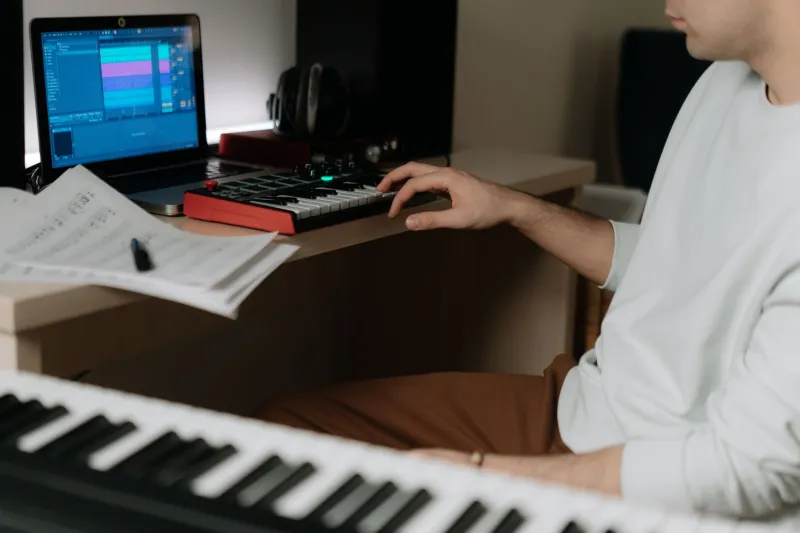
Before making any decisions, build a reference rig in whatever DAW you already use. The setup is the same everywhere: two tracks, level-matched, one gain plugin, one loudness meter on the master.
- Ableton Live: drop Utility on each reference track for trim, put a free LUFS meter on the master, and use the cue out to switch fast. Fast switching matters more than perfect switching.
- Logic Pro: the Loudness Meter in the Metering folder is good enough on its own. Solo between your print and a commercial reference and watch integrated values settle over a full section, not a bar.
- Reaper: the Render dialog's dry run gives you integrated loudness and true peak without printing anything, which makes iteration almost free.
- Studio One: the Project page reports loudness continuously; the trick is to compare full-song readings, not the momentary number that jumps around.
- Pro Tools: the Pro Limiter's loudness analyzer does the job, but mute-solo between references rather than trusting your memory of a sound from thirty seconds ago.
The one rule: level-match by ear with a gain trim, then listen. If your louder version wins only because it is louder, it did not win.
Gain staging for the big three without printing three masters
Mix with headroom — peaks around -6 dBFS, no limiter, no clipping on the master bus. Then master once, to about -14 LUFS integrated, with the limiter doing no more than 1 to 2 dB of gain reduction on the loudest chorus. Set your true peak ceiling at -1 dBTP.
That file goes everywhere. If a sync library or a picky client wants an Apple-friendly version, derive it with a simple 2 dB output trim rather than re-limiting — you keep the same transient shape and stop introducing new artifacts. Only reach for a genuinely separate master when the material is dynamic enough that a trim would audibly change the balance, which is mostly a concern for jazz, classical, and anything with a real crescendo.
The verification pass nobody does
Bounce your master to the codec the world will actually hear it in — a 256 kbps AAC or a 320 kbps MP3 — and measure true peak again. Lossy encoding can push peaks up by half a dB or more, and a master that measured clean at -1 dBTP in the DAW can clip on someone's phone. If it does, drop the ceiling to -1.5 and re-export. This one step prevents more ugly streaming complaints than any plugin you can buy.
The habit that ends the tail-chasing
Write your targets down before you start: integrated loudness, true peak ceiling, maximum gain reduction. Then stop listening to the master alone. Check it level-matched against two commercial references, check it in mono, and check it on a phone speaker. If it holds up in all three places, the platform's normalizer has nothing left to punish you for.
The war is over. The only people still losing it are the ones fighting a target that stopped existing a decade ago.